Rating law for farms and rural property, England and Wales
Agricultural Business Rates & Exemption Information
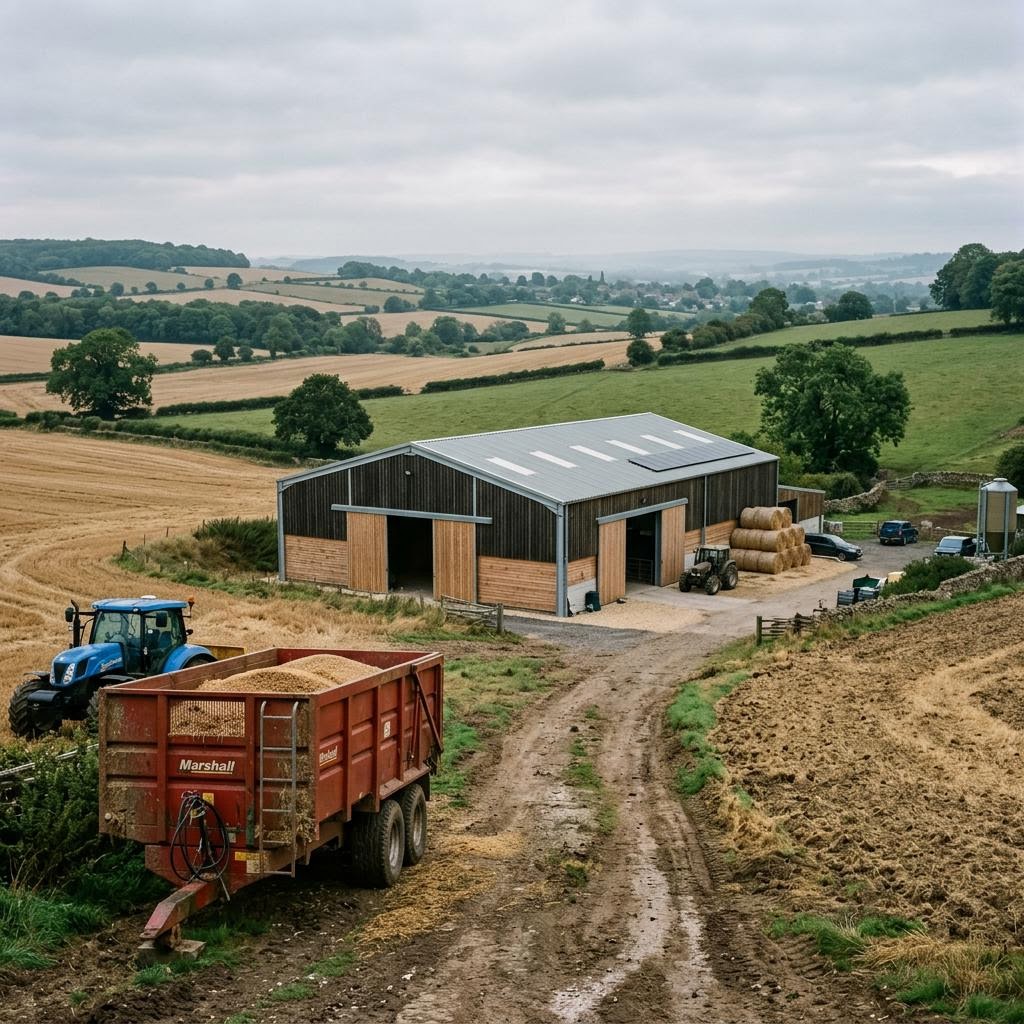
Could your agricultural property be exempt from business rates?
Qualifying agricultural land and agricultural buildings can be exempt from non-domestic rates where the statutory requirements are satisfied.
However, the exemption depends on the legal definition of agricultural land and buildings, occupation, use and the circumstances of the property.
Do farms have to pay business rates?
Sometimes, and not for the whole farm. Agricultural land can be exempt, and qualifying agricultural buildings can be exempt, where the statutory requirements are satisfied.
- The exemption is statutory. It comes from Schedule 5 to the Local Government Finance Act 1988.
- Not every building on a farm is automatically exempt.
- The actual occupation and use of the property matter.
- Diversification can create rating liability.
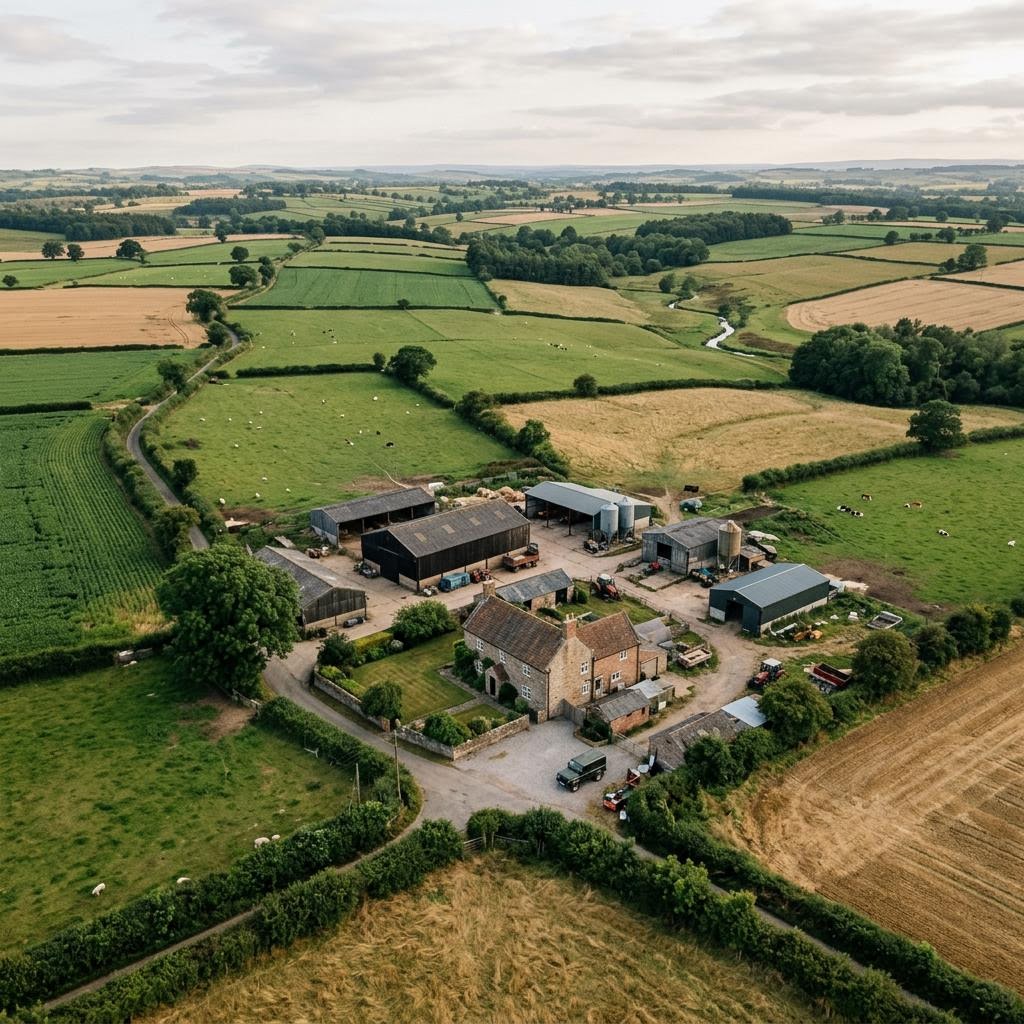
The exemption
What is agricultural exemption?
Schedule 5 to the Local Government Finance Act 1988 exempts a hereditament to the extent that it consists of agricultural land or agricultural buildings. What counts is set out in the statute, not in the word "farm".
- Agricultural land
- Agricultural buildings
- Statutory definitions
- Occupation
- Use
- Connection with agricultural operations
- Livestock buildings
- Market gardens
- Nursery grounds
- Mixed use
- Diversification
Qualifying agricultural buildings may be exempt where the statutory requirements are satisfied. Whether yours do is a question of fact.
Find Out MoreHistorical development
How Agricultural Exemption Has Developed
The agricultural exemption from business rates is not a modern concession. Its current form is the result of legislation developed over many decades and interpreted through rating tribunal and court decisions.
The Evolution of Agricultural Business Rates Exemption
Earlier rating legislation
Agricultural rating exemption predates the Local Government Finance Act 1988. VOA guidance notes that some of the terminology still used in agricultural rating has roots reaching back into 19th-century legislation, and that later legislation adapted the exemption to changes in farming practice.
The modern statutory concepts have roots in earlier rating law, but Schedule 5 should not be read as simply reproducing it.
Read the historyLocal Government Finance Act 1988
Schedule 5 is the principal modern statutory framework for the exemption. Paragraph 1 gives the basic exemption, paragraph 2 defines agricultural land, paragraphs 3 to 7 deal with categories of agricultural building and paragraph 8 contains interpretation provisions.
Read the exemption guideLocal Government Act 2003, section 67
Use widened. Occupation unchanged.
Section 67 amended paragraph 3(a) so that a building may be used solely in connection with agricultural operations on "that or other agricultural land".
This broadened the use test. It did not remove the occupation requirement: the building must still be occupied together with agricultural land.
Read the 2003 amendmentTunnel Tech Ltd v Reeves [2015] EWCA Civ 718
A Court of Appeal decision on mushroom mycelium production and the nursery-ground wording of Schedule 5. It exposed a limitation in the legislation, which led Parliament to act.
Read the Tunnel Tech caseNon-Domestic Rating (Nursery Grounds) Act 2018
Inserted paragraph 3(c): a building that is or forms part of a nursery ground and is used solely in connection with agricultural operations at it. Retrospective in England from financial years beginning on or after 1 April 2015 and in Wales from 1 April 2017.
Read about the 2018 ActBunyan (VO) v Fridays Ltd [2025] EWCA Civ 666
Occupation test confirmed. Appeal dismissed on the facts.
The Court of Appeal, on 22 May 2025, held that the Upper Tribunal had wrongly read the 2003 amendment as relaxing occupation, confirmed the single-agricultural-unit test, and still dismissed the VOA appeal because of the Upper Tribunal's alternative finding of a single unit.
It is not a blanket exemption for packing or processing buildings.
Read the Fridays analysisCurrent VOA guidance
The VOA Rating Manual explains how the Valuation Office approaches the legislation. It is administrative guidance, not law: the legislation and judicial decisions determine the legal framework.
See the sources and casesUse the left and right arrow keys to move between stages.
Make the distinction
The 2003 amendment widened the use test. It did not remove the occupation requirement.
Fridays, 2025
Not a blanket exemption for packing or processing buildings.
Case law
Eleven decisions that shape the exemption
Rating tribunals and the higher courts have considered what is agricultural land, what are agricultural operations, and how occupation, livestock and use are to be understood.
The library is searchable by topic, from nursery grounds and processing to occupation, and each case follows the same structure, with its limits stated.
The most recent word
Bunyan (VO) v Fridays Ltd [2025] EWCA Civ 666
The Court of Appeal accepted that the single-agricultural-unit test for occupation survives the 2003 amendment, but dismissed the VOA's appeal because the Upper Tribunal had found, in the alternative, a single unit on the facts.
Case law shows how the tests are applied. Your building's facts decide how they apply to you.
Ask About Your Farm BuildingBrowse by topic
Quick Check
Frame your question before you ask it
Fourteen short questions about occupation, use and the Rating List. Skip any you cannot answer. Your answers stay in this browser and are not sent to the site.
Agricultural Rates Quick Check
Fourteen questions to frame your property
Every question is optional. Your answers stay in this browser and are not sent to the site. This is a framing tool, not a legal determination.
Common questions
All 21 questionsDo farms pay business rates?
Some parts of a farm may, and some may not. Qualifying agricultural land and qualifying agricultural buildings can be exempt from non-domestic rates in England and Wales where the statutory requirements are satisfied. Other premises on a farm, such as a farm shop, holiday let or commercial workshop, are assessed on their own facts and may be rateable.
Do farms have to pay business rates?Are agricultural buildings exempt?
Qualifying agricultural buildings may be exempt where the statutory requirements are satisfied. Being on a farm is not enough. Which test applies depends on the type of building and, for the most common route, on occupation and use.
Agricultural buildings and business ratesIs agricultural land exempt?
Land that falls within the statutory definition of agricultural land in paragraph 2 of Schedule 5 may be exempt. The definition is specific, covering uses such as arable, meadow and pasture ground, certain woodland, market gardens, nursery grounds, orchards and other husbandry, and it is applied to how the land is actually used.
What is Schedule 5?
Schedule 5 to the Local Government Finance Act 1988 is the principal statutory source of the exemption for agricultural land and agricultural buildings from non-domestic rating in England and Wales. Paragraph 1 gives the exemption, paragraph 2 defines agricultural land, paragraph 3 and the following paragraphs describe categories of agricultural building, and paragraph 8 contains interpretation provisions.
The agricultural exemption explainedWhat is agricultural exemption?
It is the statutory exemption from non-domestic rates for a hereditament to the extent that it consists of agricultural land or agricultural buildings. It is a creature of legislation, interpreted by the tribunals and courts, and applied by the Valuation Office Agency in accordance with its published guidance.
What does "occupied together with agricultural land" mean?
For the paragraph 3(a) route, the building must be occupied together with agricultural land. The VOA looks at whether land and building are in the same occupation, whether they are jointly controlled and managed, how they relate geographically, and whether they form a single agricultural unit. Distance alone is not necessarily decisive, and being part of the same enterprise is not enough by itself.
Still unsure? Describe the building and its use.
Discuss a VOA Rating IssuePrimary sources we work from
- LegislationLocal Government Finance Act 1988, Schedule 5 (Exemption: agricultural land and buildings)
- LegislationLocal Government Act 2003
- LegislationNon-Domestic Rating (Nursery Grounds) Act 2018, section 1
- VOA administrative guidanceVOA Rating Manual: Part 6 Exemptions, Part D Agricultural premises
- VOA administrative guidanceVOA Rating Manual: Farm diversification
- GOV.UK guidanceBusiness rates: exempt properties
- Court of Appeal judgmentBunyan (VO) v Fridays Ltd [2025] EWCA Civ 666, judgment of 22 May 2025